THE FORMAT
Stations in a row
The first circuits, from Leeds in 1953, used 9 to 12 stations. A classic circuit gives 15 to 45 seconds to each, with little or no rest between.
See the effects doodlecircuits
Start
WHAT THE STUDIES SHOW
A circuit is a row of exercises done one after another.
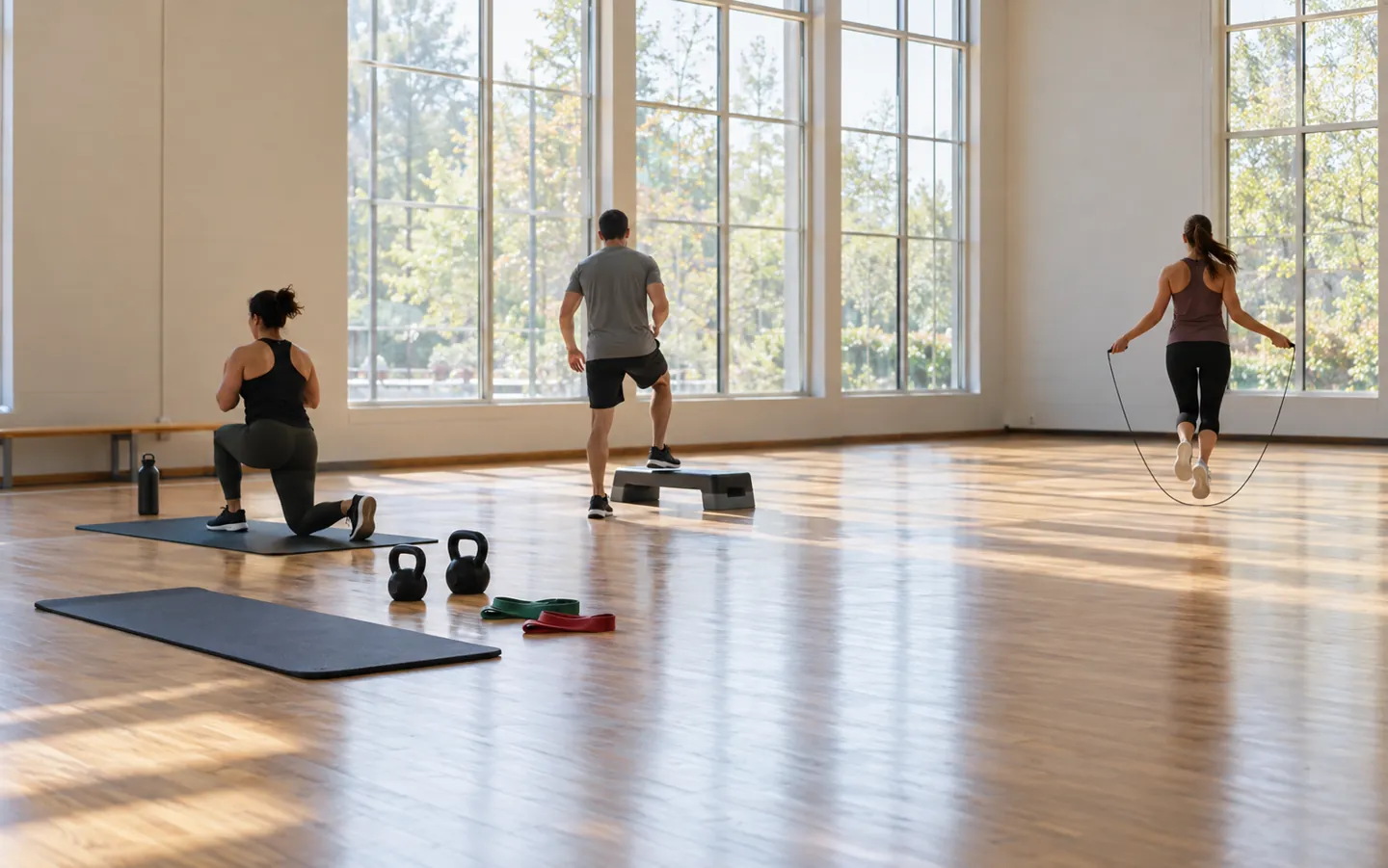
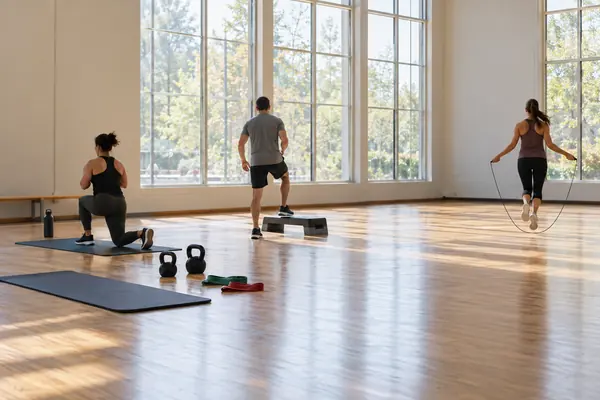
You work at one station, move on with little or no rest, and go round again. The format was developed at the University of Leeds in 1953, and a 2021 review of 45 studies found it builds strength and fitness together.
KEEP MOVINGshort rests, many stations
See the effectsKeep in mind
THE SHORT ANSWER
Circuits mix muscle work with keeping the heart rate up.
The research backs both.
THE FORMAT
The first circuits, from Leeds in 1953, used 9 to 12 stations. A classic circuit gives 15 to 45 seconds to each, with little or no rest between.
See the effectsSTRENGTH
A 2021 meta-analysis found circuit training increased upper and lower body strength and added muscle mass.
See the numbersGUIDELINES
The NHS lists circuit training as very vigorous activity, and muscle-strengthening work counts toward the 2 days a week adults should aim for.
Build a circuitWHAT A CIRCUIT CHANGES
Choose an outcome to see what a 2021 review of 45 circuit training studies found. The bar shows how large and clear the average change was.
Based on Ramos-Campo et al. (2021), a meta-analysis of resistance circuit-based training in adults aged about 18 to 42. General information, not personal medical advice.
TWO NUMBERS WORTH KNOWING
Two average changes from 45 studies
of circuit training in adults.
+6.3%
Average rise in VO2max
Across the studies, circuits improved VO2max by 6.3% and aerobic performance by 2.6%. The training programmes lasted 10 weeks on average, with 2 or 3 sessions a week.
AEROBIC FITNESS · META-ANALYSIS 2021
−4.3%
Average fall in fat mass
Fat mass fell by 4.3% and muscle mass rose by 1.9%. Short rests of 10 to 30 seconds between exercises were linked with a bigger fall in fat.
BODY COMPOSITION · META-ANALYSIS 2021
The review included 45 studies, with 897 people in circuit training groups and 474 in control groups. Sessions used between 6 and 14 exercises.
FOUR STEPS TO A CIRCUIT
A circuit can use machines, hand weights, resistance bands, your own body weight or a mix. Start gently and build up.

Step 1
Studies in the review used 6 to 14 exercises per session. The original Leeds format had 9 to 12.
Step 2
Plan the order so you switch between upper and lower body, as the carefully sequenced circuit tested in a 2004 study did.
Step 3
Move on with little rest. In the review, rests of 10 to 30 seconds between exercises gave a bigger fall in fat mass.
Step 4
Studies used 2 or 3 sessions a week. The NHS says adults should do strengthening activities on at least 2 days a week.
WHERE IT BEGAN
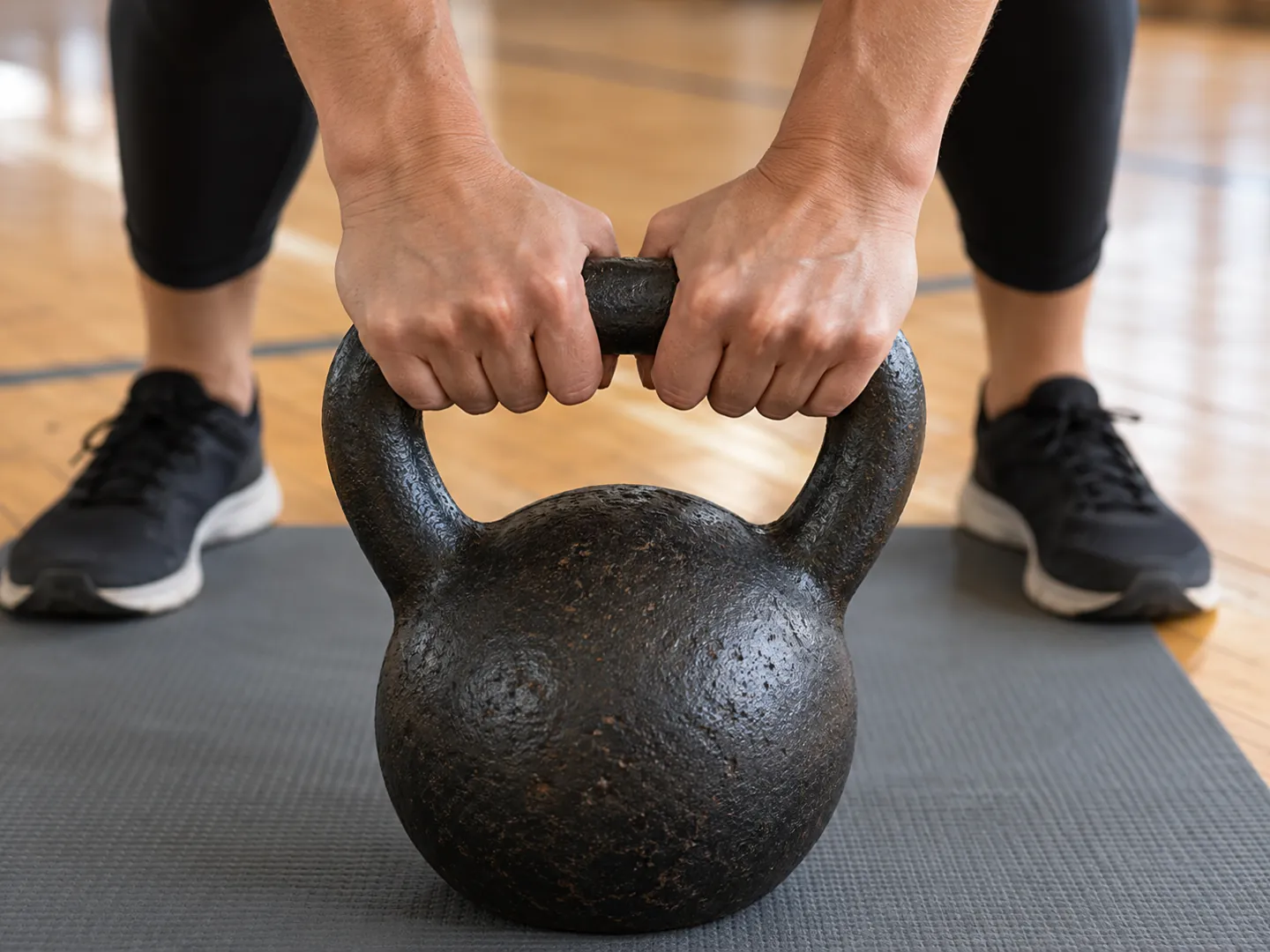
Circuit training was developed in 1953 at the University of Leeds. The original format had 9 to 12 stations. Each person moves from one to the next with 15 to 30 seconds or no rest, doing 8 to 20 repetitions at about 40 to 60% of their one-repetition maximum.
Some circuits add an aerobic station, such as a short run or step session, between the strength stations. A 2004 study reviewed by the University of New Mexico found that even a continuous circuit at a light load, without aerobic stations, raised oxygen use to levels that meet guidance for building aerobic fitness.
Questions
A set of exercises arranged one after another as stations. You do each one for a set time or number of repetitions, then move straight on to the next with little or no rest, and repeat the round.
It can count as both. The NHS lists circuit training among very vigorous activities, and the 2021 meta-analysis found improvements in both aerobic fitness and strength.
The studies in the 2021 review mostly used 2 or 3 sessions a week. The NHS advises adults to do strengthening activities on at least 2 days a week and at least 150 minutes of moderate or 75 minutes of vigorous activity.
Circuits keep rests short. In the review, rests of 10 to 30 seconds between exercises were linked with a larger fall in fat mass than longer rests.
The NHS says to speak to your GP first if you have not exercised for some time, or if you have medical conditions or concerns, and to make sure the intensity is right for your fitness.
Destination
Updated
ABOUT THIS NAME
doodlecircuits.com is part of the DoodleSale portfolio. It isn't in an auction right now, but you can ask about leasing it.